
Nature Posts
Marbled Salamander
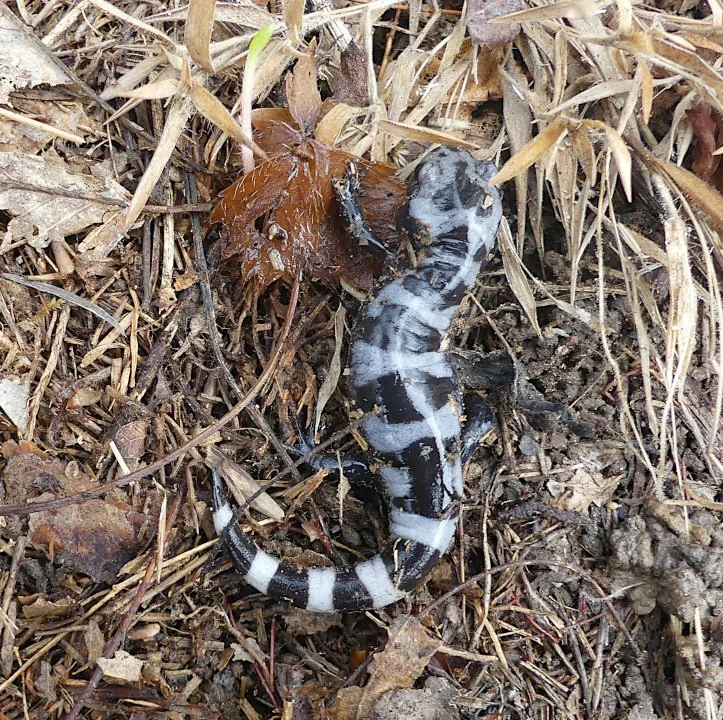
Marbled Salamander are native to Virginia. They grow up to four inches and live for 8 to 10 years. They are a species of mole salamander and so are seldom seen out and about, leaving their hiding places only in the fall to mate. They also secrete a toxin to deter predators.
Marbled Salamanders have a more complex reproduction process. The males and females meet up in the fall - in a depression they know will be filled with water later. They do a dance of chasing each other in a circle, nose to tail. If it’s a good dance, the male deposits a sperm packet on the ground, and the female picks it up into her body.
When the eggs are developed in her, she lays them on the dry ground. Many females will curl up around the eggs to protect them until water comes. When it does, she moves on back to her spot in the woods. Since these eggs may hatch in the fall, the larvae have an advantage over slalmanders that lay eggs in the spring, and will prey on the new arrivals. Salamander larvae are similar to tadpoles but have fluffy gills that visibly protrude to the sides just behind their heads. These are reabsorbed into the body when the larvae are ready to leave the water and go live on land as a young adult. They also develop little legs soon after hatching, whereas tadpoles only develop legs when they are ready to change into adult frogs.
For a deeper dive into Marbled Salamander, click this link to Wikipedia